Health and Safety Policy for Landscapers Norwood
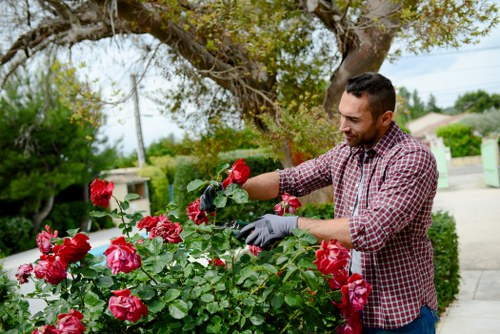 This health and safety policy sets out how landscaping services in Norwood are planned and delivered to reduce risk, protect workers, and support safe outcomes for clients and the public. It applies to all outdoor work carried out by our teams, including garden maintenance, site clean-ups, soft landscaping, and rubbish removal associated with routine property care. Our approach is practical, consistent, and designed to meet day-to-day operational needs without compromising safety.
We recognise that landscaping work can involve manual handling, sharp tools, moving vehicles, uneven ground, changing weather, and contact with waste materials. To manage these hazards, every job is assessed before work begins. Landscapers in Norwood are expected to identify risks, use suitable controls, and stop work if conditions become unsafe. Safety is treated as part of quality service, not as a separate task.
 This policy supports all staff, contractors, and supervisors involved in landscape maintenance and property clearance. It also applies to work undertaken across our broader service area, including residential, commercial, and light industrial locations where rubbish collection, green waste handling, and outdoor tidy-up services may be required. All personnel must follow safe systems of work and report hazards promptly.
Before each job, a basic site check must be completed to identify trip hazards, overhead risks, unstable surfaces, nearby traffic, wildlife, broken glass, and hidden debris. Special care must be taken when handling mixed waste or bulky items. Where necessary, PPE such as gloves, boots, hi-vis clothing, eye protection, and hearing protection must be used. The specific equipment depends on the task, but the expectation is always that the right protection is chosen and worn correctly.
Rubbish company services often involve lifting, loading, and moving materials that may be heavy, dirty, or contaminated. To reduce injury risk, loads must be assessed before being moved, and team lifting must be used when required. Vehicles and trailers must never be overloaded, and waste must be secured during transport. Sharp objects, hazardous items, and unknown substances are to be isolated and handled according to procedure.
 Equipment used in landscaping and rubbish clearance must be kept in safe working order. This includes mowers, trimmers, blowers, hand tools, wheelbarrows, and collection equipment. Any defective item must be taken out of use immediately. Staff are responsible for checking tools before use, cleaning them after use, and storing them securely. Supervisors must ensure inspections and maintenance records are kept up to date.
Training is essential to safe operations. All workers must be instructed in manual handling, safe tool use, hazard recognition, emergency response, and waste segregation. New staff receive task-specific induction before they begin work independently. Refresher training is provided when equipment, procedures, or risks change. This helps maintain a consistent standard across all landscaping and rubbish-related activities.
Landscaping Norwood projects may require coordination with clients, neighbours, site managers, or other trades. Good communication is necessary to prevent accidental access to work zones and to reduce disruption. Work areas should be marked where appropriate, and the public should be kept clear of moving machinery and waste-handling activity. Clear signage, controlled access, and tidy work practices all contribute to a safer environment.
Emergency preparedness is part of everyday safety. First aid supplies must be available, and workers should know how to respond to cuts, strains, heat stress, slips, vehicle incidents, and contact with hazardous waste. In the event of an accident or near miss, work must be paused, the area made safe, and the incident reported for review. Corrective action should be taken to prevent recurrence.
 Waste management must be carried out in a responsible and orderly way. Green waste, recyclable materials, general rubbish, and unwanted items should be separated where practical to support efficient disposal and reduce contamination. Rubbish removal should never create new hazards, such as blocked walkways, unstable piles, or exposed sharp edges. Loads should be arranged safely, and disposal should follow all applicable handling requirements.
We also expect good housekeeping throughout every job. Tools, packaging, offcuts, and waste should be cleared as work progresses rather than left until the end of the day. This reduces slip and trip hazards and helps maintain a professional standard. In wet or windy weather, extra caution is required because conditions can change quickly and affect footing, visibility, and control of materials.
 Management reviews this policy regularly to ensure it remains effective, current, and suitable for the services delivered. Feedback from site audits, incident reports, and operational checks is used to improve procedures. Every person involved in our Norwood landscaping work has a role to play in keeping the workplace safe, protecting the environment, and delivering dependable service with care and responsibility.

